|
View in browser |
 |
|
|
|
This edition at a glance 👀 |
|
> Latest Research: New survey data on Canadian attitudes toward phone restrictions in schools.
> In Focus:
-
*NEW*: Canada’s School Phone Policy Report Card ranks province-by-province progress on going phone-free at school.
-
Chalkboards to Chatbots: Dais analysis finds generative AI won't replace teachers, but could help them in their jobs.
-
Your Attention Please: Three perspectives on youth social media harms from our spring film screening of the acclaimed documentary by Director Sara Robin. Pre-order now on Apple TV.
> Events:
-
URL to IRL, Canada’s leading youth-powered summit exploring phone-free school policies and healthier relationships with tech, returns to Toronto on November 5. Save the date!
-
The TMU Democracy Forum returns online on September 10 with former Alberta Premier, Jason Kenney.
-
Our partners Let's Go Live are kicking off a series of four-week, in-person experiential programming to help teens and adults navigate the challenges of growing up in a digital world.
|
|
|
A note from our Executive Director |
|
|
|
Dear friends of the Dais,
Starting this week, students across the country return to school at a moment of peak anxiety about the phones in their pockets, and the technology in their classrooms. At the Dais, a core focus of our work is preparing and protecting students in a world where digital technologies - and increasingly AI - will mediate how they live, learn and work.
In this newsletter, we’re taking a closer look at three urgent, intersecting issues confronting students, educators, and families:
1. Phone distractions in schools.
Our new research finds that school phone restrictions are immensely popular, with support from nearly 90% of Canadians. Yet, views are mixed on whether these policies are actually working in schools—and more than half of parents believe their high schoolers’ still use their phones at school.
School systems must do better. Last week, the Government of New Brunswick made thoughtful updates to strengthen their phone policies, which will now cover the full school day (or "bell-to-bell"), with added support for educators to support the rollout. See the progress happening across Canada with our new School Phone Policy Report Card.
2. Regulating harmful social media apps.
Last week’s $18-billion Meta settlement in the US, for designing apps that addict children and improperly collect their data, was momentous. Advocates have been pursuing stronger accountability measures for years, while the negative impact on children and teens has continued to worsen. Our own Youth Champions acknowledged as much when we premiered the acclaimed Your Attention Please documentary in Canada. Though Meta’s changes are an important step, there is no substitute for government regulation. When Parliament returns this fall, we’ll continue our calls for Canadian legislators to move quickly to pass the Safe Social Media Act (Bill C-34).
3. Supporting educators through the AI transition.
Receiving less attention, but no less urgent, is the need to get a grip on educational technologies (EdTech) and AI in K-12 classrooms. While headlines often focus on students using AI to write essays, less attention is paid to how these tools impact the educators running our schools. In our new policy brief, we analyze the impact of generative AI on six education occupations. The good news? The technology offers high potential to streamline workloads and lesson prep rather than replace human judgment.
This fall, we’re calling on policymakers to hit the books, too. Canadians are demanding leadership, creativity, and above all, action to support young people as they navigate the digital age.
Onward,
André Côté
Executive Director, the Dais at Toronto Metropolitan University
|
|
|
|
|
|
|
|
National Survey on Canadian Attitudes about School Phone Bans |
 |
|
Provincial governments across Canada have sought to address growing concerns about screentime, learning, and youth wellbeing by introducing personal cell phone restrictions in K-12 in schools.
For the third year in a row, the Dais has measured Canadians’ attitudes on these policies, including their levels of support and how they believe enforcement is going.
We found that:
-
Support for phone restrictions has reached an all-time high of 87% across Canada.
-
Canadians overwhelmingly favour firm, clear rules - either full-day bell-to-bell phone restrictions or restrictions during instructional time.
-
Canadians are evenly divided on how effectively they believe these policies are enforced. Under bell-to-bell restriction policies, parents express much higher confidence in the effectiveness of enforcement.
-
Despite restrictions, many students are still using their phones in classrooms: one in two parents reported that their child used their phone in class at least once during a given week.
|
| GET THE HIGHLIGHTS |
|
|
|
|
Grading Canadian Provinces on Their School Phone Policies |
 |
|
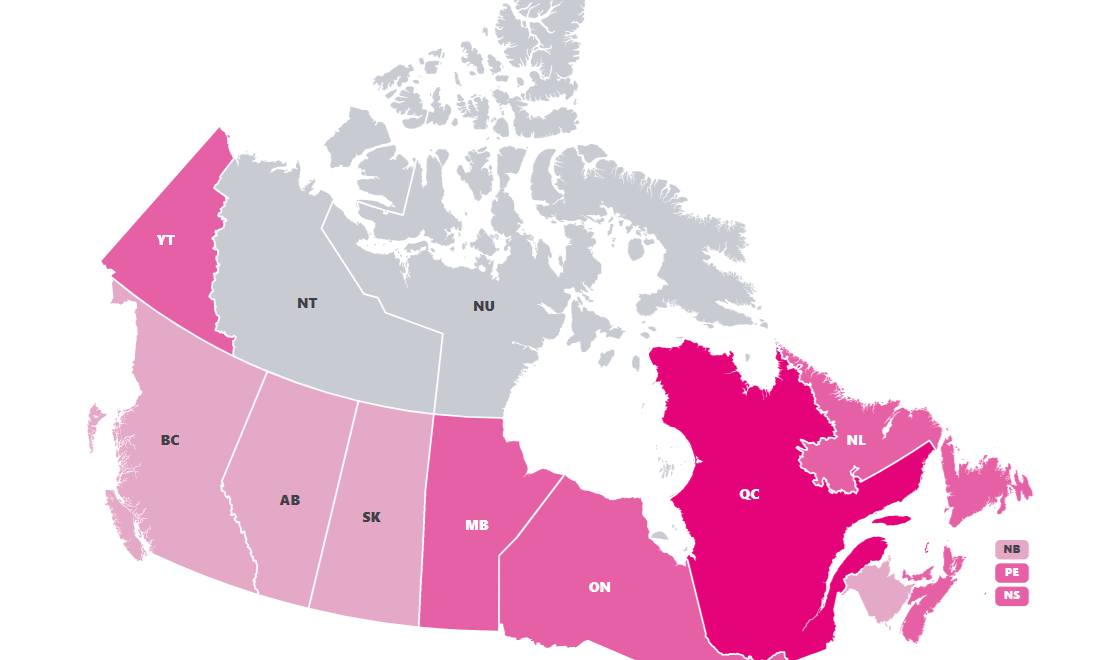
As part of the Heads Up Canada-wide campaign to go phone-free in schools, we’re rolling out a new and improved Canadian School Phone Policy Report Card - an assessment tool for grading and comparing provinces based on the strengths of their official policies and directives.
How does your province measure up?
|
| EXPLORE THE REPORT CARD |
|
|
|
|
Chalkboards to Chatbots: Impact of Generative AI on Canada's K-12 Educators |
|
|
|
|
|
How will AI transform the day-to-day work of teachers and principals? In our new policy brief From Chalkboards to Chatbots, we analyze the AI exposure of 840,000 Canadian education workers.
The key takeaway: while K-12 roles interact frequently with generative AI tools, the technology is well-positioned to help education workers instead of replacing them.
|
| READ THE BRIEF |
|
|
|
|
Young People Reflect on Social Media Harms |
 |
|
Following our packed Your Attention Please screenings in Toronto and Ottawa in partnership with the SickKids Child Health Policy Accelerator, we sat down with attendees to reflect on what stayed with them.
Ibrahim, a grade nine student and Heads Up Youth Champion, had a pointed takeaway:
“Watching the documentary, it was astonishing to see the blatant disregard that big tech corporations like Meta and TikTok had for the effects they posed on the youth."
With the landmark Meta settlement and announced safety changes, there’s never been a better time to reflect on our tech use—and platform accountability, particularly as parliament debates the Safe Social Media Act (Bill C-34) this fall.
You can now preorder Your Attention Please, available to rent or buy on October 6.
|
| REVIEW THE RECAP |
|
|
|
|
URL to IRL returns November 5, 2026 |
 |
|
Young people across Canada are reclaiming their attention. This is where it happens.
URL to IRL, Canada’s leading youth-powered summit exploring phone-free school policies and healthier relationships with tech, returns for its second year on Thursday, November 5, 2026!
Join us at MLSE Launchpad for a day of intergenerational conversations, interactive programming, and bold ideas shaping the future of learning in Canada.
In case you missed it: check out the highlights from URL to IRL 2025.
|
|
|
|
|
|
|
|
 |
|
The rallying cry for Canadian sovereignty has intensified across the country over the past few weeks. How does Alberta's upcoming referendum fit into this renewed push for national unity?
Join us on September 10 at noon for a new season of the TMU Democracy Forum in conversation with Jason Kenney, former Premier of Alberta.
As premier, Kenney worked to secure Alberta’s place in Canada. Today, he’s a key voice in the fight to keep Alberta in the federation. Together, they’ll examine the referendum on Alberta’s political future that is just weeks away, and discuss what it takes to keep Canada together.
Join us from anywhere on Zoom (advance registration required).
|
| REGISTER |
|
|
Partner event series: Let's Go Live |
 |
|
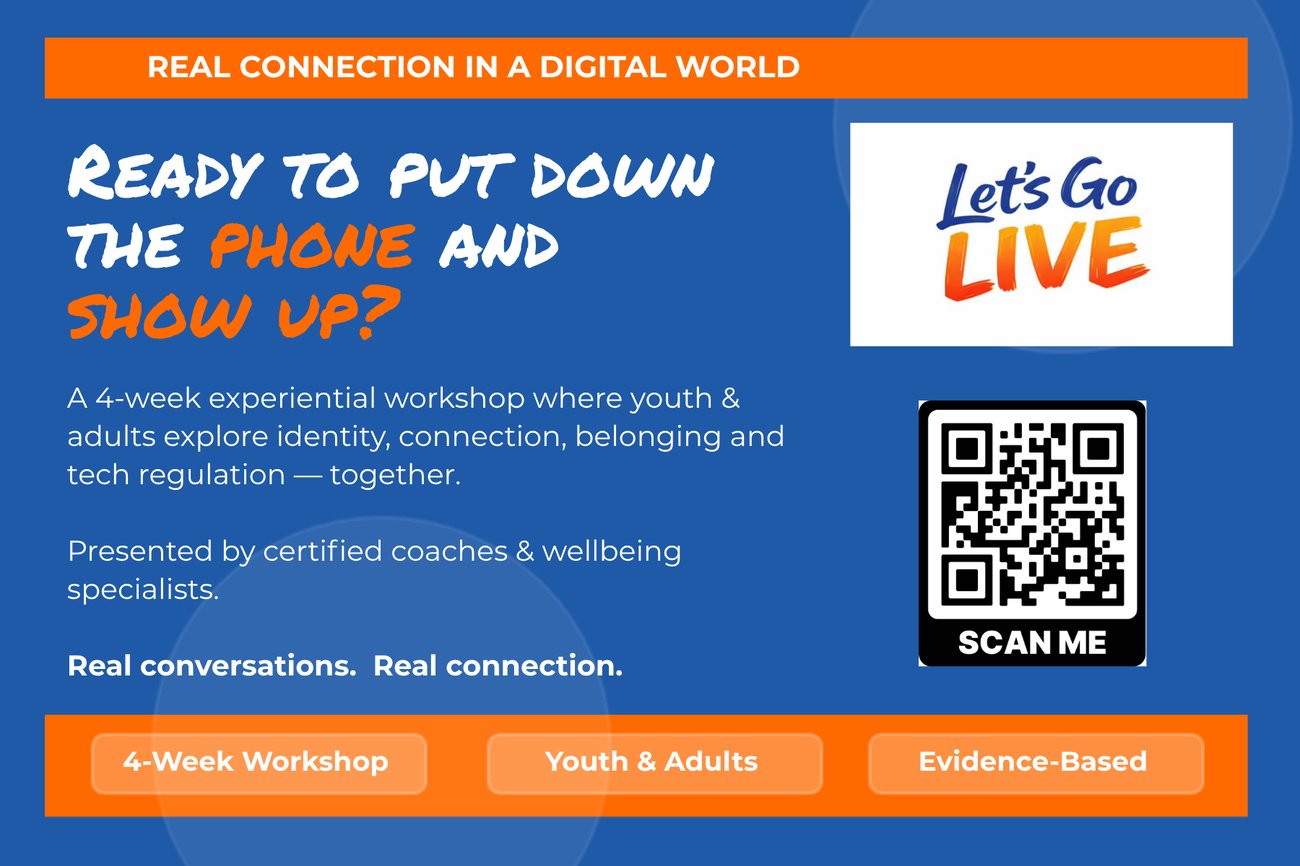
Let’s Go Live is a four-week, in-person experiential program designed to help teens and the adults in their lives navigate some of the challenges of growing up in an increasingly digital world.
Upcoming programs in Mississauga, Toronto and St. Catharines start this fall.
|
| LEARN MORE AND REGISTER |
|
|
|
|
In the News |
|
|
|
A majority of Canadians support school cellphone bans. But in Toronto classrooms, a sharp divide exists (Toronto Star)
Cites our latest survey on Canadian support for school phone bans and quotes our Executive Director André Côté on the gap between popular and effective policies.
Companies Replaced Humans With AI. Now They Regret It. (MacLeans)
An article by Viet Vu, Manager of Economic Research (as told to Sanam Islam) on the risks companies face by relying too much on AI without human judgment.
Why Jimothy is the viral raccoon the internet says it needs right now (CBC Kids)
Quotes Dais Executive Director André Côté on how viral memes like Jimothy the raccoon cut through toxic social media content to bring people shared joy.
Canada must step up to tackle AI’s catastrophic risks (The Globe and Mail)
An opinion piece by Director of Partnerships Jake Hirsch-Allen and Grand Challenges Canada’s Kristen Cordell outlines a path for Canada and its international partners to strengthen global AI governance.
Across Canada, the fight against artificial intelligence goes offline (The Globe and Mail)
Our Executive Director, André Côté, spoke to Joe Friesen at The Globe and Mail about what growing public skepticism of AI means for Canada's future.
China launches new AI: Experts say it rivals Claude Mythos from Anthropic (Global News)
Our Director of Partnerships, Jake Hirsch-Allen, commented on China’s new AI model.
Job prospects are bleak for many recent grads — but this group has a shot at making six-figure salaries (Toronto Star)
Our Manager of Economic Research, Viet Vu, commented on Canada’s job market for recent grads.
Generative AI use at work nearly doubled in a year: StatCan (Human Resources Director)
Our Executive Director, André Côté, commented on the mixed benefits of AI adoption at work.
Au Canada, l’IA devient un nouveau champ de bataille entre responsables politiques et populations locales (Le Monde)
Our Manager of Economic Research, Viet Vu, weighed in on the gap between government ambitions and public sentiment on Canada's AI strategy. |
|
|
|
|
|
|